
Stages hub
Meccha Chameleon Maps
The game's stages come in two supplies: official maps that ship with the game, and an endless Workshop pipeline of community maps. This hub documents both supplies honestly and separately — including which stage facts we've verified and which we're still confirming in-game.
The Official Map Roster, as the Community Documents It
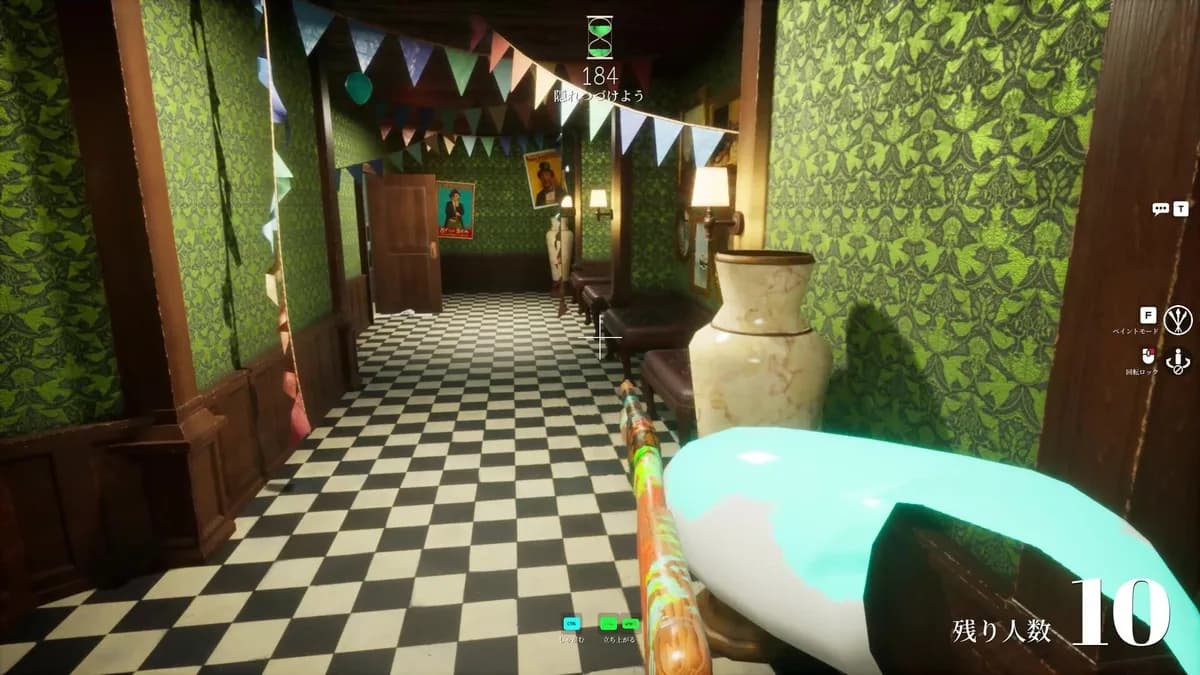
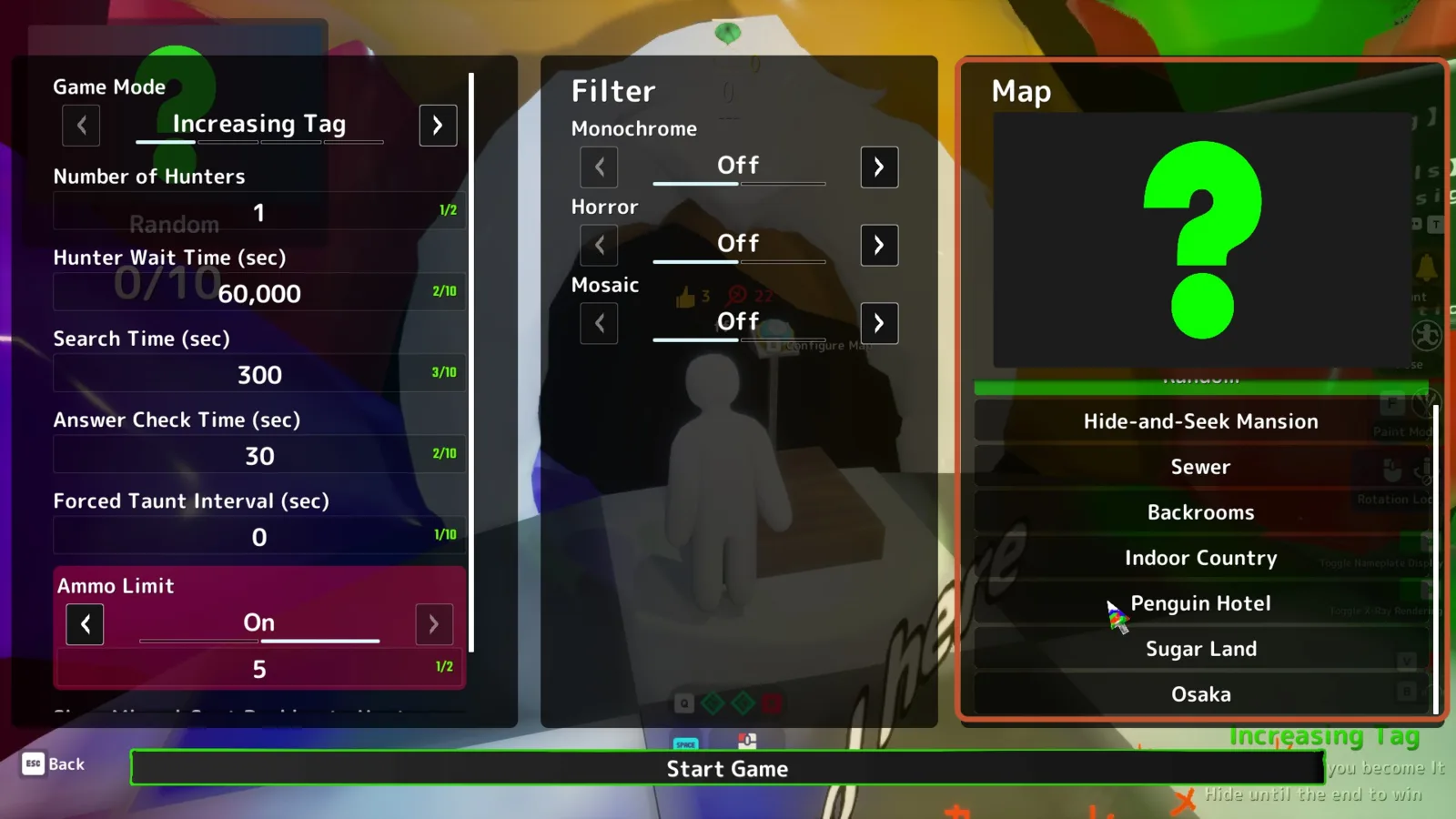
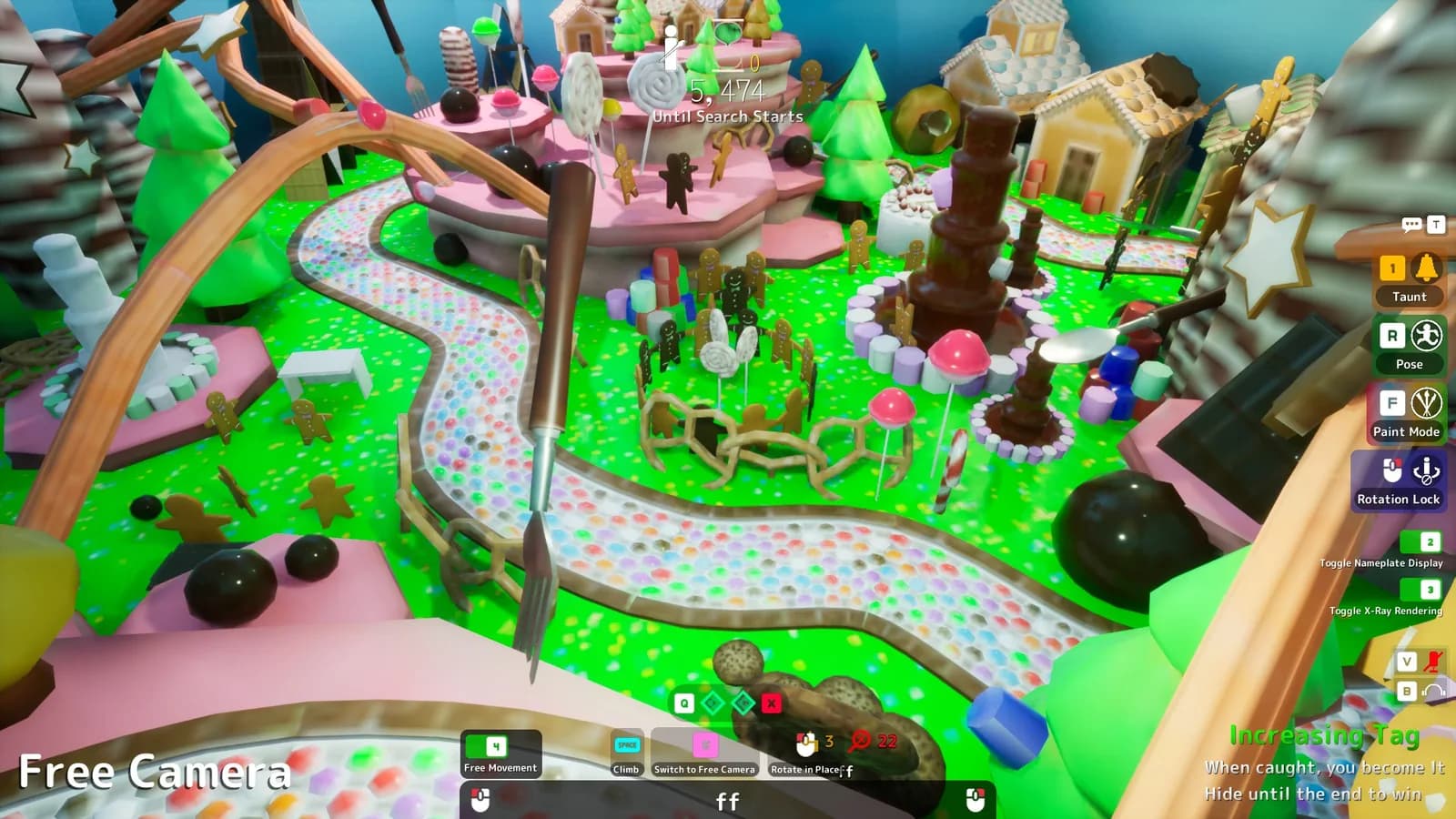
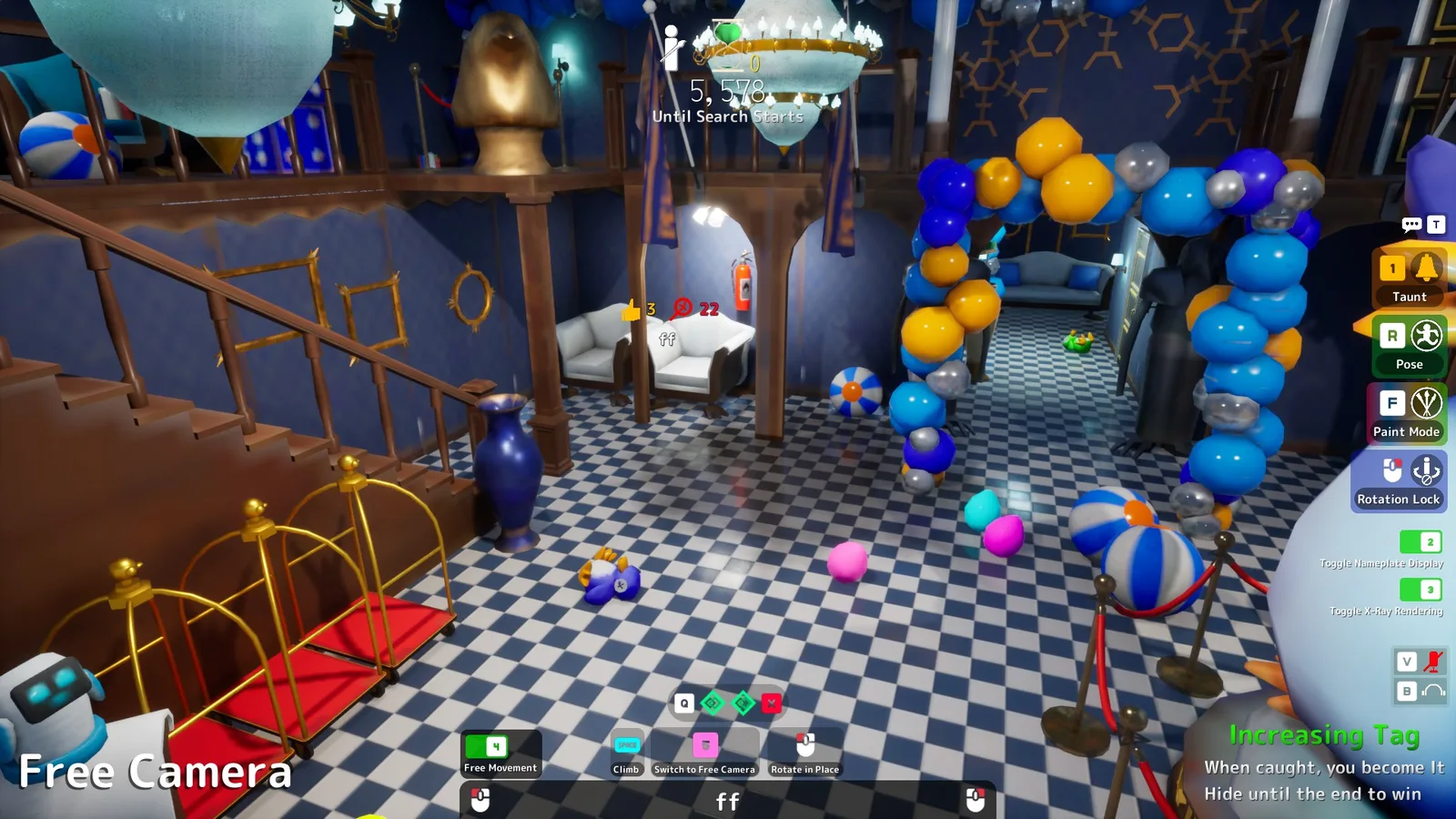
The roster stands at seven maps — Hide-and-Seek Mansion, Sewer, Backrooms, Indoor Country, Penguin Hotel, Sugar Land and Osaka — verified in-game on 2026-07-03 straight from the room setup's map selector (screenshot below), with four of the names independently corroborated by official patch notes.Mansion is widely recommended as the training stage for its dense, varied hiding geometry (full stage guide at the link), and the developer is actively iterating: 2.2.0 introduced furniture randomization on Mansion with plans to extend it to all maps. What the official Steam screenshots document directly is the environmental range:
| Map | Character | Guide |
|---|---|---|
| Hide-and-Seek Mansion | The training stage — all four archetypes, now randomized | Stage guide |
| Sewer | Dim tunnels where silhouette is the whole exam | Stage guide |
| Backrooms | Monotone office maze; color free, shape expensive | Stage guide |
| Indoor Country | Bright farm diorama, the roster's mimicry playground | Stage guide |
| Penguin Hotel | Two-story lobby ruled by mezzanine sightlines | Stage guide |
| Sugar Land | Dessert diorama; repeated props, merciless colors | Stage guide |
| Osaka | The newest stage — urban verticality, growing file | Stage guide |
Workshop Maps: the Infinite Second Supply
Official Steam Workshop support means the map pool never really closes. The flow is friction-free: browse the Workshop hub, subscribe with one click, and the map appears in your private-lobby options after an automatic download. For groups, community maps solve the staleness problem better than any patch could — a stage nobody has memorized resets everyone to pure archetype-reading (our spot guide was written for exactly this). Curation advice: sort the hub by rating for reliable picks, sort by newest for chaos, and check a map's size before game night — over-decorated community stages can dip frame rates on modest hardware, which our FPS guide covers.
Building a Game-Night Rotation
A practical formula from many party-game evenings: open with an official stage everyone half-knows (fast, warm, no downloads), spend the middle on two or three well-rated Workshop picks the host subscribed to a day early, and save one absurd wildcard map for when energy dips — novelty is a renewable resource in this game if you ration it deliberately instead of burning it all in the first hour. Rotate who picks; the picker plays Seeker first, which keeps selections honest. And when a community map produces a legendary round, note its name — rotations are built from remembered chaos and shared vocabulary, and the Workshop's search remembers even when you don't.
How Stage Knowledge Compounds
One strategic note that makes this hub worth bookmarking: stage knowledge is the quiet second currency of this game. Every official map you internalize — its traffic paths, its prop inventory, its forgiving light — pays out in both roles: Hiders shortlist spots faster, Seekers notice the one wrong object sooner. Workshop maps then reset that advantage on purpose, which is exactly why mixed rotations stay fun for mixed-skill groups. Learn officials deeply, visit community maps to stay humble — and notice how fast the second habit sharpens the first.
FAQ
Maps at a Glance
- Official maps7 · in-game verified
- Stage varietyDocumented above
- Community mapsSteam Workshop
- Install methodOne-click subscribe
- Custom maps in matchmakingNo — private lobbies
Last checked: 2026-07-03