
Beginner guide
How to Play Meccha Chameleon
The whole game in one sentence: paint yourself to match the room, hold still, and don't giggle. The five steps below take you from first lobby to genuinely competent — most players click after two or three rounds.
The Five Steps
Understand the two roles
Every round splits the lobby into Hiders and Seekers. Hiders paint their plain white bodies to blend into the stage; Seekers sweep the stage to tag every disguised player before the timer runs out. Roles swap between rounds, so you'll learn both fast.
Use the prep phase to paint
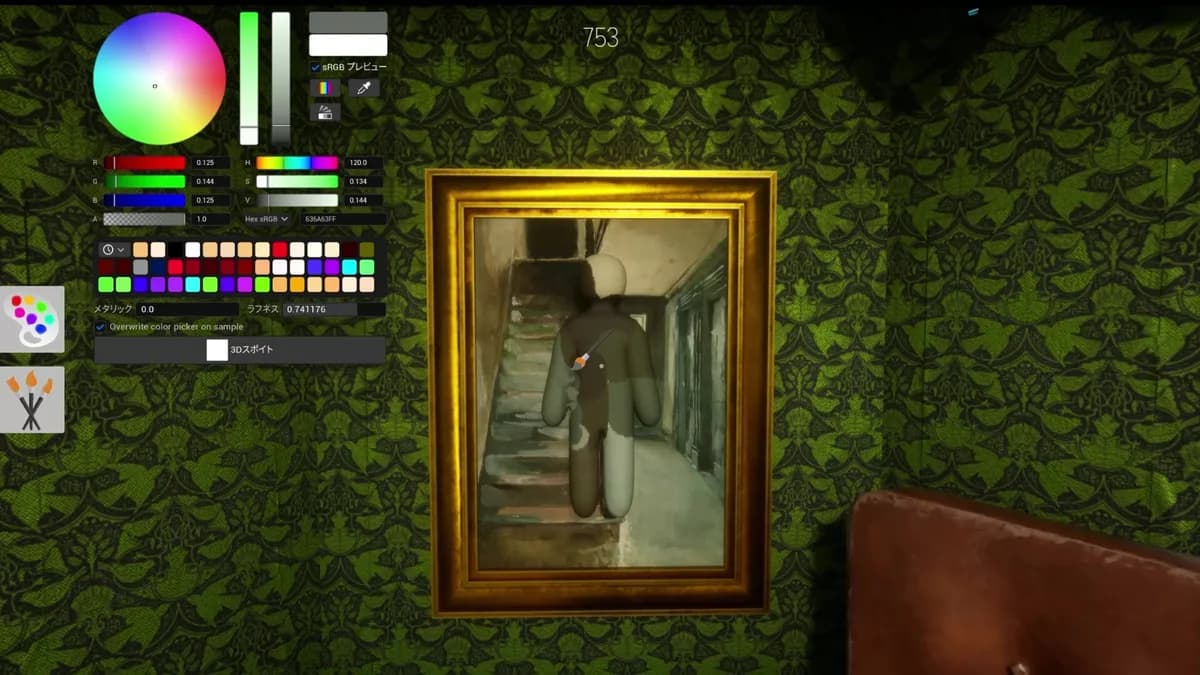
As a Hider you get a preparation window before Seekers enter. Open the paint tool, sample colors directly from the surface you plan to hide against, and cover yourself completely — bare white patches are what get you caught.
Pick a spot that explains your shape
Color is half the disguise; context is the other half. Stand where a person-sized object makes sense: flat against a mural, among stacked laundry, beside furniture. A perfect paint job in the middle of an empty floor is still a person in the middle of an empty floor.
Hold your pose and your nerve
Once the sweep starts, movement is death — Seekers scan for twitches and outline changes. Commit to a pose your fingers can hold, and resist repositioning unless a Seeker is clearly closing in on your exact spot.
Seek in systems, not vibes
When you're the Seeker, sweep room by room instead of wandering. Look for color seams, duplicated props and objects that don't belong. Change your angle before shooting anything you suspect — missed shots cost health, so confirm first, then fire.
The Mistakes Every First-Timer Makes
Three patterns account for nearly all early tags. First, incomplete coverage: you paint your front beautifully and forget your back — a Seeker circling the room sees a perfect mural with a white spine. Second, greedy spots: hiding right next to the round's objective traffic, where every Seeker walks anyway. Boring corners survive longer than clever centerpieces. Third, the panic shuffle: moving because a Seeker got close, when they hadn't actually seen you. Movement converts "maybe" into "tagged" instantly — hold, and most sweeps pass by.
As Seeker, the equivalent rookie error is checking loudly and randomly. Quiet, systematic room clearing — with an eye for one-too-many chairs — finds more Hiders than sprinting ever will. One more Seeker habit worth building early: when a round ends, remember where the survivors were. Winning spots get reused, and the Seeker who learns a stage's greatest hits stops being fooled by them.
After Your First Session
Once the basics feel natural, the improvement path runs through our other guides: rebind awkward defaults via the controls guide, steal habits from the tips collection, and graduate to stage-specific strategy in the hiding spots guide (all linked from the guides hub). And if your group is still assembling, lobby sizes and setup live on max players and where to play.
Don't Own It Yet?FAQ
Cheat Sheet
- Paint from the surface you'll hide on
- Cover your back, not just your front
- Spot must explain a person-sized shape
- Movement = tagged; hold the pose
- Seek room-by-room, count the props
Last checked: 2026-07-03