
Strategy guide
Best Hiding Spots in Meccha Chameleon
Here's the truth pages of "top 10 spots" won't tell you: named spots expire the moment they're famous. What doesn't expire are the four archetypes every good spot belongs to — learn to see those, and every stage (including Workshop maps nobody has mapped) becomes readable on sight.
The Four Archetypes
Clutter clusters
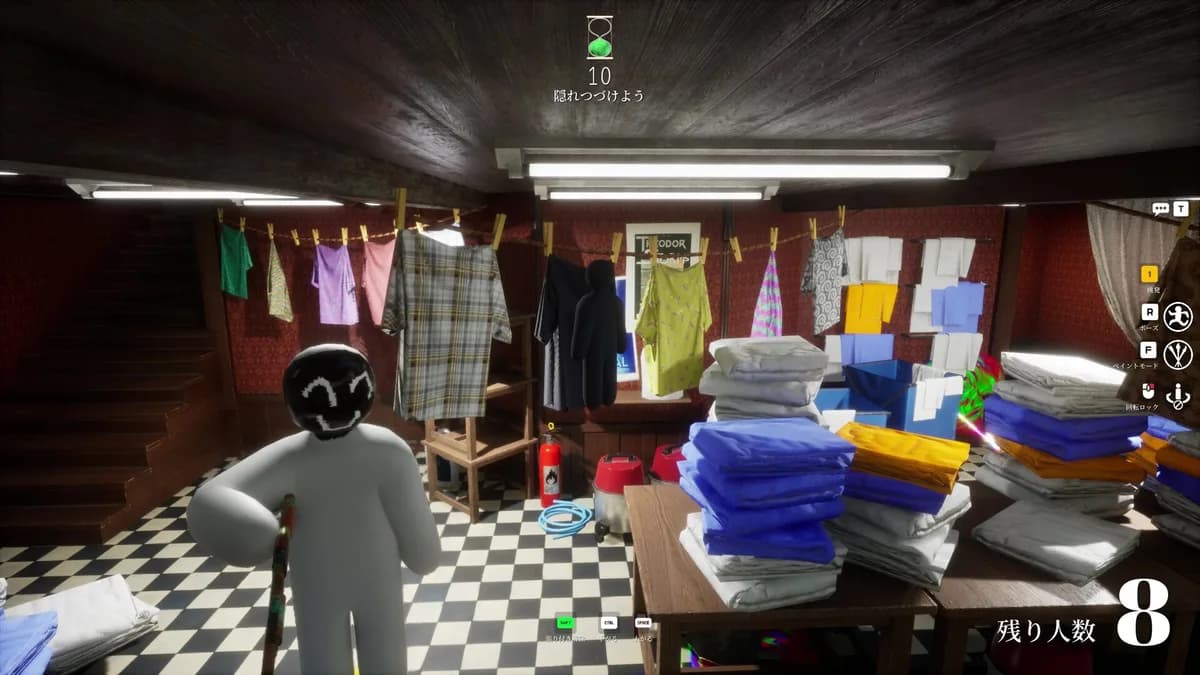
Stacked laundry, loaded shelves, prop piles — places where one more object raises no eyebrows. Your paint job only needs to be good, not perfect, because the visual noise does half the work. Weakness: prop-counting Seekers.
Elevation
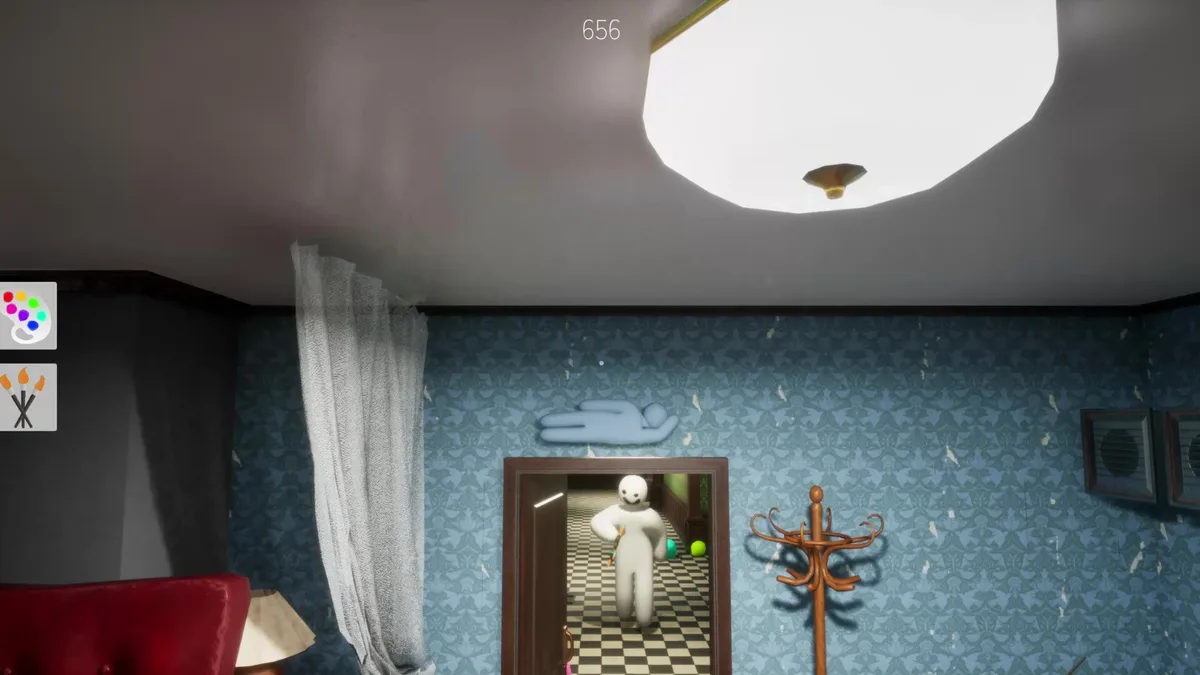
Ceilings, tops of furniture, above the door frame. Players scan at eye level by habit, and even good Seekers forget to look up for the first few rounds of a session. Weakness: once one Hider is found high, everyone looks up for the rest of the night.
Flat surfaces
Murals, wallpaper, picture frames — press flat and become texture. The highest skill ceiling: your paint must match pattern and lighting, and your pose must kill your silhouette. Weakness: any movement is instantly fatal against a static backdrop.
Prop mimicry
Standing in as furniture, produce or décor. The comedy option that's also legitimately strong in rooms with repeated objects. Weakness: you must know what the room 'should' contain better than the Seeker does.
Reading a Room in Ten Seconds
Prep-phase spot selection is a fast triage, and it goes in this order. First, traffic: where will Seekers walk first? Spawn-adjacent zones and objective paths get swept early and carelessly — usually avoid, occasionally exploit (see the FAQ). Second, shape amnesty: which surfaces in this room could plausibly contain a person-sized lump? That shortlist is your real menu, whatever the archetype. Third, light: shadowed and evenly-lit surfaces forgive small paint errors; harsh bright walls broadcast every mismatch — official screenshots of the brighter stages show exactly why white-ish leftovers get people caught. Ten seconds, three filters, then commit and paint from where you stand.
How We Publish Spots Without Burning Them
Fame decay is real — a published "best spot behind the piano" is a worse spot the day after publication — and furniture randomization (2.2.0+) rots address lists on its own schedule. So our per-map guides publish spots in a format built to survive both: first-hand verified, dated, labeled by archetype and by durability (structural spots outlive shuffles; furniture-anchored ones are enjoyed while they last). Each entry teaches the reading rule that generated it, so even a checked spot still pays tuition. The framework above stays the core skill, because it works on maps that don't exist yet: Workshop stages arrive weekly (maps hub), and archetype-readers own them on first sight. The seven stage guides live on the maps hub.
The Decoy Layer: Spots as a Team Game
In bigger lobbies, spot choice stops being solitary. Every Hider is every other Hider's decoy, and the shape of the round changes with distribution: scatter across zones and the Seeker's fixed sweep order gifts the far zones extra minutes; cluster in one room and you make it a minefield where each discovery slows the sweep with paranoia — but one systematic clearer can end four of you in twenty seconds. The spicy middle path is the deliberate sacrifice: one player takes a slightly-too-obvious spot, gets found "satisfyingly", and the Seeker moves on having already cashed in that room. None of this needs voice-chat coordination — it emerges from players who understand the archetypes reading each other's choices during prep.
The Vertical Layer: Wall-Stick Positioning
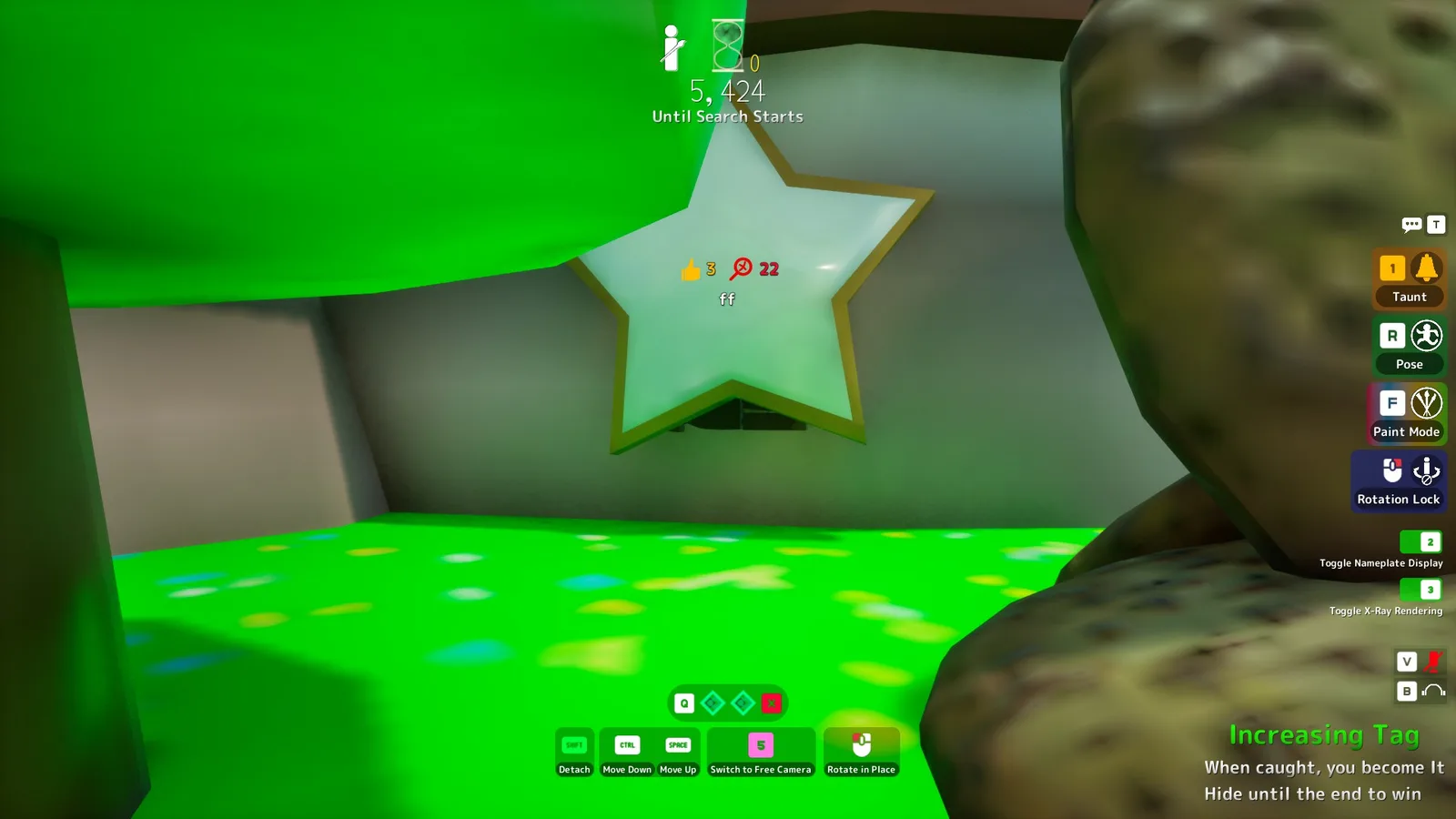
Elevation (archetype 2) has a mechanical toolkit worth learning deliberately. Once attached to a surface, community-documented bindings give you Space and Ctrl to fine-tune height and Shift to release — which turns walls and ceilings from gimmicks into precision real estate. The craft is alignment: hug door frames, shelf edges, vents and ceiling trim so your body reads as architecture rather than interruption, and manage your cast shadow (the V-key section of the painting guide) because off-floor shadows fall exactly where Seekers scan. One patch-era note: body sizes and randomized furniture (updates 2.2.0+) keep shifting what "aligned" looks like — verify your favorite perch still exists before trusting it with a round.
FAQ
10-Second Triage
- Avoid first-sweep traffic
- Shortlist person-shaped amnesty
- Prefer forgiving light
- Commit, sample, paint in place
Last checked: 2026-07-03